Thursday, August 1, 2013

Day 2 of Gopalganj Field visit; RMRI; Malda


Day 2 in Gopalganj

After an...um...eventful night in a hotel in Gopalganj (I think they charged me extra for the small furry "guest" in my room - perhaps named "Mickey?") we set out for a second day of field work in the District.

This time, we again joined Atul, the local CARE Link Worker, and visited a Block called Barauli, starting with its Primary Healthcare Centre, which is just about 13km from the one we visited in Manjha. Unlike in Manjha block, the Indoor Residual Spraying (IRS) spray workers were not on strike here, and had completed spraying of homes this Spring.

They had treated 71 cases of Kala Azar over the past twelve months, with 29 since January - a number that has been decreasing (again, attributed to the effectiveness of the IRS campaign).

With the doctors of Barauli PHC
In Barauli PHC, the doctors first rule out malaria and typhoid, diagnose KA with the rK39 diagnostic test strips plus a clinical assessment, and then dispense the government-provided miltefosine for free to those who test positive. They mentioned that they sometimes have the ASHAs (see last post) distribute the meds and report back to the PHC doctors when dosing is complete.


The line was very long at the PHC...
When we probed a bit on the apparent issued we had heard about from the Tola yesterday (namely, discontinuation of treatment due to vomiting), the medical officer said that they would not reduce the dose, but if a patient came to them complaining of such a side effect, they would give them something (in this  case, an anti-emetic) to help them tolerate the medicine better.

...with lots of people waiting outside
The doctors here also told us about some of the educational efforts that they had organized to teach people on the villages about KA, and how to prevent it, which included informational sessions about how to recognize the symptoms of KA (long fever unresponsive to treatment, inflamed spleen), and where to go (the PHC!) if they suspect they might have KA.

This PHC - which was small, but tidy, serves 300,000 people! This helped explain the long lines of people outside waiting to be seen. Although they seem to be trusted and known for good service, it was easy to see why some patients might prefer to go to a untrained provider (quack/Rural Medical Practitioner) to avoid the waiting times.

We next drove over to a nearby tola, called Kahala, to meet with a Kala Azar patient named Mira.

Ishani, right, interviewed Mira, center
Mira is an anganwadi worker. An anganwadi is sort of like a government care center that focuses on health and child and maternal care, with nutritional and contraceptive counseling for mothers, and serving as a day care for children too young for school (the term means "courtyard shelter").

Adorable kids at the anganwadi


As her day-care kids sat by (remarkably well-behaved - and very cute!), Mira explained to us that she had once seen some KA educational material in a public hospital office, and had remembered it when she started developing the symptoms. She had gone to the PHC we had just visited, but had had some side effects from the miltefosine they had given her. Unlike the people we'd met in Dhai tola yesterday, rather than seeking help from a private doctor, Mira went back to the facility in which she'd seen the KA material, in Hajipur, near Patna, which happens to have a KA program run by Doctors without Borders. There, she received Liposomal Amphotericin B, which may be the best-tolerated new, effective drug for KA, and was cured.
All the people behind Mira have PKDL - she is sending
 them to Hajipur for treatment
She mentioned that many people in this area are afflicted with KA or Post-Kala Azar Dermal Leishmaniasis (PKDL - see last post), so she sends them to Hajipur to get treated there if they have trouble with the medication they get from the local PHC.

Interestingly, she said the villagers here in Kahala had welcomed the IRS sprayers. They understand the major problem that KA represents, and were happy to accept any help in controlling it. This attitude was similar to that of the people of Dhai yesterday, who had gone years without a spraying campaign, but would eagerly accept it if it meant less KA.

After thanking Mira for the time away from the children, we stopped by a nearby RMP (quack) office - a large hut with a couple of rooms, more spacious than those we'd visited in the past.

Our very experienced RMP
The quack said he had been a practitioner here for 44 years, and knew everyone in the three or four villages he serves. He didn't have any current KA patients (that he knew of) - a good thing, as of course RMP's should not be treating KA! HE said the number of cases has been going down, as (he thought) both "natural" (cyclical) reduction had been occurring, and the IRS had been working.


We asked him about how he manages a patient with a fever. He said he starts with some indigenous-medicinal methods (go home and wash their head, I think he said?), or prescribes paracetamol (a mild analgesic). After a few days, if that does not work, he sends them on to the PHC. We wish we heard more of this sort of response from other quacks! Ideally, patients would quickly get moved on to the PHC if they have an unresponsive fever, as it usually means malaria, typhoid, or KA.

Of course, he said he also sometimes sends the patient to a private doctor, if they request to do so. He was aware, though, that the PHC offered free medicine, so preferred to send people there. He had, he said, administered some injections of sodium stibogluconate (SSG - what the patients from Dhai had been prescribed by the private doctor) for some patients last year.

We moved on to visit another patient, and older gentleman who actually had had KA ten or eleven years ago, and now had PKDL. He sat us down and served us some hot chai and some snacks, and then showed us the PDKL lesions across his arms and neck.

PKDL lesions
We asked him what he was doing for treatment, and he said he had been seeing a Homeopathic doctor for three years, to no avail (unsurprisingly). Like all of the other patients we'd seen with PKDL over the past couple of days, he said he'd had SSG treatment for KA, which, at the time, was the only available treatment.

While we were speaking to the gentleman, a family with a young boy came by. The boy was nearing completion of a course of miltefosine capsules, which they had obtained from the PHC after seeing a quack.The boy's father mentioned that he had been away earlier this year, at the time the IRS sprayers had come through his village. As his wife had not been made aware of the reason for the DDT, she immediately plastered over the walls after the spray team had left.He said if they had been properly educated about KA and the IRS campaign, they would not have done so.


Overall, we found a lot more evidence of the fact that the RMPs/quacks were able to grasp the seriousness of KA, and what to do if they suspect a case - if they are properly educated about it. In an area like Gopalganj, with a much-higher incidence of KA than the districts we visited on our first field visit a couple of weeks ago, the quacks seem to already understand all of this, though of course the more education that is available to them, the better.

We also learned that there seem to be several gaps in the effort to eliminate Kala Azar:

1) The IRS process can be effective, and may even be welcomed by the villagers - but only if efforts are taken to ensure that all villages are thoroughly sprayed, and that people are properly educated about why the spraying is necessary and what they should do before and after the spraying occurs.
2) PKDL is starting to become better-recognized (and we saw evidence of it being treated by the PHCs) - but there are still lots of cases of PKDL around that are as-yet undetected by the public system. Lots of education here is necessary as well.
3) Patients who receive miltefosine, which is the only medicine provided by most PHCs in Bihar, sometimes react badly to it and discontinue its use. If that happens, care must be taken to provide a better alternative to SSG - which doesn't always work, is toxic, and often results in PKDL. Amphotericin B, especially the safer and more effective Liposomal variety, should be made widely available as a second-line treatment, if not first-line.

Lots of work to do for CARE!!
With Atul

RMRI

The day after returning from Gopalganj, we went with Ishani and our team lead, Dr. Indranath, to Rajendra Memorial Research Institute in Patna, which is a widely-known facility that specializes in Neglected Tropical Diseases, especially Kala Azar.

Patna CARE team members with Director Das of
 RMRI and some of his team
RMRI is and has been conducting many of the research studies into different medicines to treat KA, different diagnostic tools and methods, the effectiveness of IRS, life cycles of sand flies and effective means to control KA transmission, and all the other aspects of KA management in India. Their studies include the full range of new medicines for KA (miltefosine, paromomycin, Liposomal Amphotericin B, etc), new products under development, and even potential vaccines for KA. They are also devoting a significant amount of effort to researching PKDL.

We met with the director of RMRI, Dr. Pradeep Das, as well as some of his key staff. They gave us a tour of the facility - which includes a KA ward, where patients who are part of their clinical trials are treated, and a sand fly research wing where they breed the insects for study. They also conduct training programs for doctors and government field workers like ASHAs.
We got to see sandflies here


We spent a little time in the KA ward speaking to a few patients. We heard the very sad story of one woman who had been on ineffective treatments for four months before reaching RMRI, losing a baby along the way.

KA ward at RMRI


Another young woman from the highly-endemic district of West Champaran was being treated after over a year, at a cost of thousands of rupees, on ineffective fever treatment by quacks and private doctors. Interestingly, she and her fiance seemed relatively well-to-do, in sharp contrast to the poorest-of-the-poor Musahar villagers we had seen last month. They had never heard of Kala Azar before this.


A third patient - a young man from another highly-endemic district, Vaishali - was being treated for PKDL. He had been sent here from the district hospital in Hajipur, which we had heard about from the anganwadi worker the previous day.

I was glad to see so much effort devoted to Kala Azar here - the top-notch research will undoubtedly save many lives in the coming years, and hopefully will eventually result in better ways to manage KA patients as well as better preventative measures.


Malda, West Bengal

Sunset on the way to Malda
After a great week in Bihar, we traveled to the neighboring state of West Bengal. We stayed the weekend in Calcutta (pictures later!) and took the train on Monday up to the district and town of Malda.


Malda is another highly-endemic district for KA, close to the Bangladesh border. While West Bengal has fewer overall cases than Bihar, and fewer endemic districts, some parts of the state between Bihar and Bangladesh, like Malda, have a high incidence.


We had to opportunity to travel around with Dr. Indranath and a cadre of representatives from the World Bank, the Government of India, and Government of West Bengal, in a review of the progress made in their elimination efforts.

During the course of the day, we visited several public health care facilities, including PHCs, Health Sub-Centers (HSCs) and a Medical College Hospital, as well as a tola to visit KA patients.

Most of the conversation was in Bengali, but we had plenty of translation from Dr. Indranath and some of the officials.


In our first stop, Moulpur Block's PHC, we heard that while a couple of years ago there had been shortages of miltefosine for KA treatment, now supplies were pretty steady, and they generally had enough to treat patients, with only the occasional stockout.


They have been getting quite a few KA cases as well as plenty of PKDL - it is good to hear that they are fully cognizant of the problem here as well.


We had to crowd into the Medical Officer-In-Charge's office - we were a party of about ten!


Outside the little HSC
The ANM in charge explained the function of the HSC
as it relates to Kala Azar treatment
After a tour of their facilities, we headed over to a nearby HSC. The sub-centers are usually simple, small houses built to receive and help pregnant women, young mothers, and their children through childbirth and early childhood care (nutrition, vaccines, etc), although they also serve as educational waypoints to communicate critical information about infectious disease like KA, tuberculosis, and malaria.

Kala Azar prevention poster inside the HSC
These centers are too small and ill-equipped for delivery of babies, but this typically happens in the home anyway, as most expectant mothers would be hard-pressed to secure transportation over rough roads to the nearest hospital (although of course there are always exceptional cases).


\
The head of the HSC is the Auxiliary Nurse-Midwife, to whom the ASHAs report. We had the chance to speak with the ANM and two of the ASHAs here. They explained how they are responsible for Directly-Observed Treatment for KA patients - basically, they travel to the patients' homes (or have the patients come to them, if possible) to watch them take their miltefosine capsules, to ensure compliance with the prescription.


We saw that there were some posters on the wall for educating locals about Kala Azar. Dr. Indranath suspected that at least one of them was put up for our benefit, but another looked like it had been on the wall for some time.

We then traveled to a nearby tola, to meet another young boy and his family. The home was a bit off the main road, so we left our cars and hiked a bit down a narrow lane to get there.

It was a bit of a hike to the patient's house!

When we arrived, he was actually away from the house, giving a bath to the family's buffalo - great to hear that he was feeling well enough to be out and helping the family!

While we waited for him to return, we had the chance to look around the tola a bit.Once again, we found mixed-material homes, with straw and mud predominating, but some concrete and some corrugated sheet-metal roofing. Plenty of livestock lived there as well - a few pigs were tied up between the house and a pond, and we had to dodge quite a few cow-patties along the lane.

Speaking with Deepak


The boy, named Deepak, eventually turned up, and the doctors had a nice conversation with him. He is 10 years old and not at all shy; he told us all about his treatment (with SSG, unfortunately - he was kept at a nearby hospital for the injections as an inpatient), and shared the little he knew about his illness. He was indeed feeling much better, and went off to play with his friends as we left.

We stopped by another PHC in nearby Gazole (pronounced "Gah-jole" - z's are pronounced like j's in Bengali) Block, in Hathibari village. We learned that this small PHC serves a whopping 400,000 people, and covers 66 HSC's.

Outside Hathibari PHC
Here we found a pretty nice system of record-keeping, as pictures of the referring ASHAs were stapled to the patient's records, which made it easier to keep track of those ASHAs who were owed incentives for referral. You see, ASHAs are not paid a salary, but instead are paid incentives for helping patients and expectant mothers.


We went to one of the Hathibari HSC's next, the Adina Sub-center.
We crowded into the tiny HSC

While we were there, a two-year-old patient and his parents dropped in for his injection of SSG for KA (miltefosine is a teratogen - it causes birth and growth defects - so is not prescribed for pregnant women, women of childbearing age, or very young children). Unfortunately, amphotericin B, which would be a much better alternative to SSG< was not available for him.

Little James with his mother
The little boy, James, belongs to one of the tribes who live in this area (he has a Christian name as he belongs to a family that had been converted to Christianity by missionaries here). He is from a remote village, Manglapara, which is about 12 km away from the PHC, and inaccessible by four-wheeled vehicles; he was brought in by motorcycle. James lives in a home with a couple of other families, and all three other children in the home had kala azar.

He had suffered from fever for about four months, treated by a quack, before he finally was taken to the PHC and received his prescription for SSG. He was pretty unhappy to be there - the ANM told us that he actually missed one of his injections because he "ran away!"

We concluded our day then - taking an overnight then back to Calcutta, and then a flight to Delhi. It was interesting to see the contrasts and similarities to what we had seen and heard in Bihar. In some places, it seemed like a lot of progress had been made to combat the spread of KA - and awareness of the disease was high among villagers. In others, KA still seems to be relatively unknown.

Thursday, July 18, 2013

Second Field Visit - Gopalganj, Bihar

[The guest house where I'm staying has lost power about five times in the past hour, so I'm hoping to post this tonight!]

As the questionnaire for our study of Rural Medical Practitioners ("quacks") and other Private-Sector health care agents in Bihar has been taking shape, we needed an opportunity to get out to one of the districts here that has a very high incidence of Kala-azar.

Our last field visit (in Patna District) was extremely informative, but it gave us the perspective of health care workers that operate in an area where KA is not a significant burden.

Patna to Gopalganj District
This time, Clara, Ishani and I headed northwest of Patna, to Gopalganj, which has many hundreds of KA cases every year. We left about 7AM, crossing the wide Ganges river as we left the city, and arrived in Gopalganj district before noon - occasional heavy traffic and some stretches of really rough road slowed us down.

One of the "vehicles" we passed along the way


When we arrived, we met up with Atul, the local CARE Link Worker, who escorted us around the villages in his territory within Gopalganj. We started at the Manjha Block Primary Health Care Centre, a public facility that deals with many more cases of Kala-azar each year than the centres we visited in Patna last month. And though our research study is really about the private sector, we need to understand how the quacks and the private doctors fit in the patient's journey (which often also includes the PHC), so we wanted to have the perspective of the public health centre doctors as well.

A Block is an administrative region within a District, containing multiple villages (so it goes village->block->district->state->country). Manjha Block contains about 100 villages, with just shy of 200,000 inhabitants. 

Like all PHCs, Manjha's deals with Maternal and Child Healthcare (it is staffed with two Auxiliary Nurse-Midwives, or ANMs), but also has several doctors, a Block Health Manager, and its Medical Officer-In-Charge, Dr. Singh, with whom we spoke. 
The line outside the PHC

Manjha Block PHC


Main ward - empty today


 We were interested in finding out how many cases of Kala-azar they see in this Block, and we were told they had had 87 in 2012, but only 20 so far this year. They attributed the decline to an effective campaign of Indoor Residual Spraying (IRS). Dr. Singh said that every house in every village had been sprayed last year (though we found some evidence to the contrary later). As I've mentioned before, IRS is comprised of teams of two sprayers with (usually) hand-pumps, spraying DDT on all the surfaces within each home, up to 6 feet off the ground. As there are probably 40,000-50,000 homes in this block alone, you can imagine that it's a costly and time-consuming event, especially considering they do it twice each year! But this is the most effective way to reduce the sandfly population, which helps reduce the incidence of Kala-azar significantly.

Unfortunately, we discovered, spraying in Manjha has not yet happened in 2013, as the spray workers were on strike, hoping to become permanent government employees instead of temporary contractors. Hopefully this won't mean a big uptick in KA cases next year.

miltefosine capsule packs
Dr. Singh explained that for PHCs, the government provides one of the newer KA medicines, miltefosine, to give to KA patients for free. Miltefosine is supposed to be given for 28 days, and he believed that most patients stuck to the regimen and completed the full course. Miltefosine takes some of the strain off of the crowded PHCs, as it is an oral drug; this allows KA patients to be outpatients instead of taking up valuable bed space in this small facility.

He also mentioned that miltefosine was used to treat PKDL patients - as previously described, PKDL (Post-Kala-azar Dermal Leishmaniasis) is an otherwise harmless infection of the skin by the Leishmania parasites after an apparent cure of KA...but those with PKDL serve as a reservoir for the protozoans, and keep the disease cycle going. Thus, curing these patients where they're found helps control the disease. It was good to hear that these patients were being identified and referred to the PHC - in this case, by the CARE Link Workers and the ASHAs.

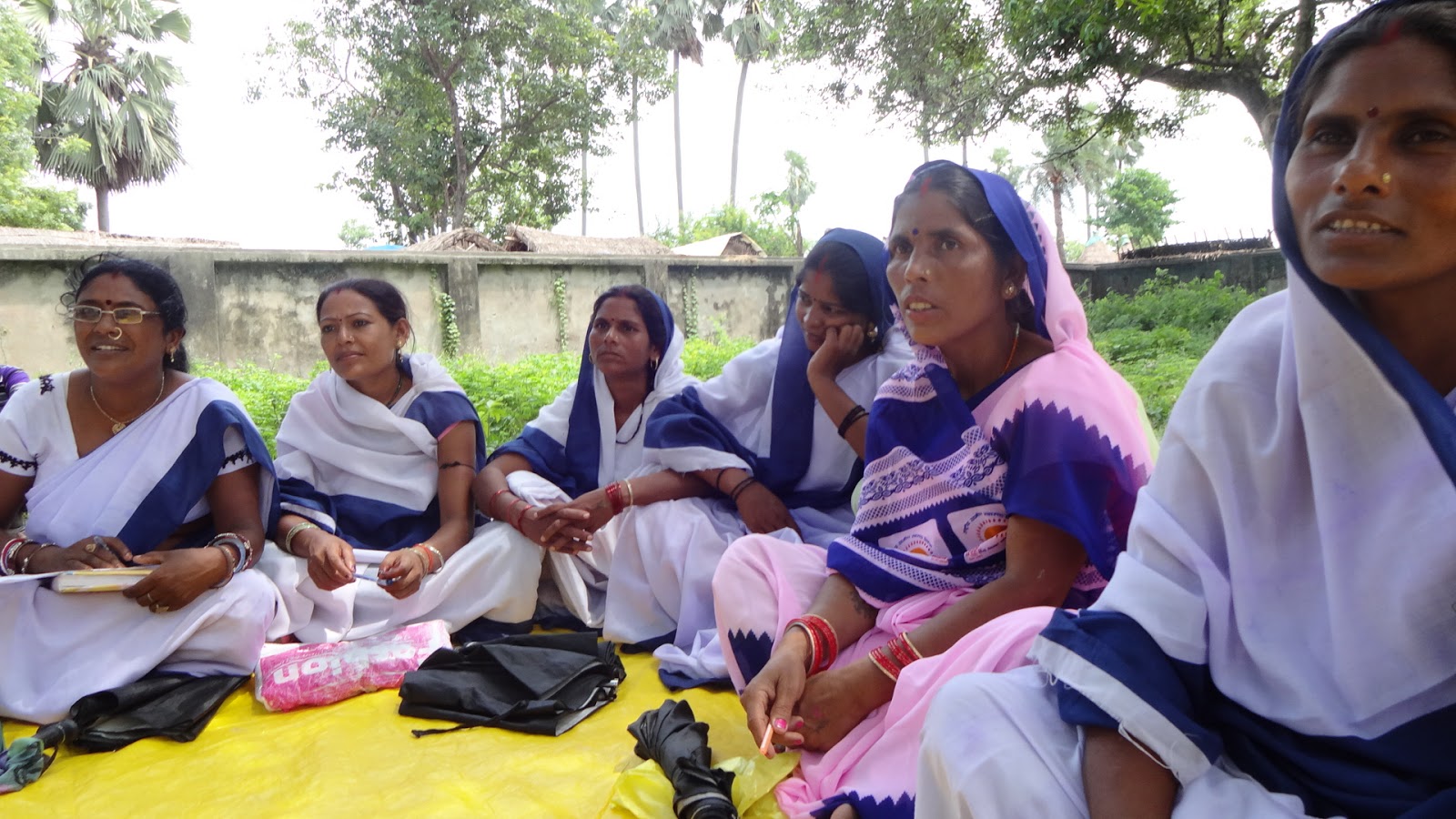
 ASHAs - Accredited Social Health Activists - are the front-line health care workers in rural India. They are all literate local women who report through the block's ANMs. As the government creates one ASHA position per 1000 population, there are about 200 ASHAs in Manjha Block. Taking our leave of Dr. Singh and the PHC, we went to meet a group of ASHAs who were getting together for a training discussion at a nearby high school.
The ASHAs were kind enough to give us over an
 hour of their time 
While the ASHAs' primary function is to attend to the needs of mothers and young children in the villages, they receive training to help manage most public health issues, including infectious diseases like TB, malaria, and Kala-azar.

For KA, they are trained to identify the early signs of the onset of the disease (two weeks+ with fever that doesn't respond to medicine, tender abdomen with enlarged spleen) and get the patients quickly to the PHC for treatment.


Clara taking notes, with some curious onlookers
 Along with finding KA patients, the ASHAs also spend time in dispelling some of the myths about the disease, and teaching villagers about how it is transmitted. They are also critical on-the-ground help when the government holds a "Kala-azar camp," shepherding ill villagers to the camps to get tested for KA and treated if positive.

Atul and Ishani translated our questions for the ASHAs
 and asked some of their own
Another key role they play is preparing the village for IRS, helping the inhabitants to understand why the spraying must occur and explaining how to prepare their homes. This requires moving many of their belongings out of the house to enable full coverage of the spray, and making sure that food items are fully covered so that they are not contaminated with the DDT. As I mentioned in my post about the tola we visited in Patna district, sometimes villagers go along behind the spray workers and plaster over the DDT, completely negating its effect! The ASHAs teach the homeowners not to do this.

Villagers sometimes doubt that the spraying helps - after all, it's hard to see the sandflies to begin with, as they are quite small and hide during the day. ASHAs do their best to assure people that it does indeed make a huge difference.

They told us that people's trust in them has been growing, and they are viewed as important members of the community now.


Importantly, the ASHAs told us that it was inevitable that villagers would visit Rural private providers (quacks), as many had the attitude that "anything free can't be good." But they were working to try to ensure people took their health seriously and to try to get people to trust the government facilities.
We attracted the usual crowd!

Photo op with the ASHAs

Thanking the ASHAs for their time, we next went to a tola to see some of the people they help.

Atul told us that this tola, Dhai, was home to a lot of current and past Kala-azar patients - and he sure was right. The villagers told us that almost every home in the tola had at least one KA patient, over 60 in all. This tola was not subject to the same abject poverty as the community of Musahars we had visited on our last field trip, but still lived with a mix of concrete, brick, and straw-and-mud homes, with livestock living in and around their homes - so still a great environment for sandflies.

We first spoke with one patient, Raju, who was currently receiving injections of the old (and now at times ineffective) cure for KA, Sodium Stibogluconate (SSG). SSG is an antimony-based drug, which can be a bit tough for patients to tolerate. But we were especially interested in why Raju was getting these injections instead of taking the pills - especially since the SSG was expensive (about $50 - a huge sum here) while the miltefosine is free!

Raju (left of center) telling us about his
 Kala-azar treatment experience
Raju explained that he had indeed gone to the PHC (after a few days of ineffective treatment by a quack) and received his miltefosine - but he had started vomiting from the capsules within two days, and stopped taking it. He then went to a private doctor and received the prescription for SSG, which was being administered every other day by a local compounder (medicine mixer). 

One of Raju's SSG vial boxes
This was the first we had heard of serious side effects leading to discontinuation of miltefosine. But Raju wasn't the only one in Dhai Tola who had experienced it - quite a few of the villagers had gone the same route. We saw the records and prescriptions for each of the villagers, and noticed that they all had visited the same Private doctor, located about 6 or 7 km from the village. Raju related that this doctor had said that miltefosine was not effective (which is completely counter to all the evidence we'd seen - though this may be a bit of a miscommunication on the villagers' part - he might have been referring to tolerability, not efficacy, issues), and that they should take SSG instead.

We then started looking at the other villagers, and noticed that at least a couple of them were showing signs of PKDL - which often shows up as bumps or spots on the face or arms. One adorable little girl, named Soni, clearly had PKDL, with typical bumps covering her face. PKDL isn't painful or distressing in any way other than aesthetically, so those afflicted often don't bother seeking medical help for it - the exception usually being young women worried about their marriage prospects. A full course of treatment usually clears up the spots - but of course more importantly eliminates a reservoir for the parasites.
Soni
  Soni had had Kala-Azar a couple of years ago, and like Raju was prescribed miltefosine at the PHC...but vomited from the medicine. She had been taken back to the PHC to get anti-nausea medicine, but her mother told us that it didn't work, so she ended up getting SSG as well.

This past week at a government conference, we had heard some evidence that those treated with SSG were more likely to develop PKDL after their apparent cure, and that seems to be bearing true here in Dhai. Several others seemed to have PKDL, including Soni's mother.We explained that the PHC could help them get treated.

Now, if you'll remember, the Manjha PHC doctor had told us that all the villages in the area had been thoroughly sprayed. It turns out that this tola hadn't seen any spray crews for five years! This helps explain the high prevalence of KA in this community. And with so many paying for SSG and visits to the private doctor, it is taking a bit of an economic toll as well. One patient told us that he had to rent out a piece of land to pay for treatment.


Striking a pose for the camera

The kids got a huge kick out of watching Ishani take pictures of them

Livestock roamed - or was led - around the tola
We walked up to one patient's house
just after this goat gave birth to her kid
This teenaged girl was just finishing up her miltefosine. The goat
 at left was hers - and notice the cow walking into her home
 
We walked through the tola and met a few other patients, including one woman who was still feeling quite ill, and a young lady, 15 or 16, who was just finishing up her miltefosine treatment. She had been started on a heavy dose, but after vomiting apparently had gone back to the PHC and received a lower dose, which she managed tolerate.


A shot down the main road - you can see a rice field on the right
 Intrigued by the situation in this tola, we decided to visit the private doctor that the tola residents had been seeing. The doctor there mentioned that he was usually seeing 10-15 patients per month. He believed that there was a lot of cases similar to Raju's and the others we'd spoken with in the tola - where they were not able to tolerate miltefosine and had to be switched to SSG. He was aware of amphotericin B, which is available in some of the District- and State-level hospitals, but it was not available locally.
 He was aware of some of the local quacks, who likely referred patients directly to him. And he mentioned that he sometimes referred difficult KA cases to the Patna Medical College Hospital that we visited on our last field visit.

Private doctor
He also said that he wasn't currently reporting KA patients to the local PHC - something that CARE hopes to enable to do through a comprehensive information system that they are currently piloting. It is important to track patients to ensure the government and the development community can identify KA hotspots, provide help where it is most needed, and measure progress against the goal of eliminating the disease.


 He said that he did indeed use local boots-on-the-ground (like the compounder Raju had mentioned) to administer the SSG injections if the patient could not easily get to his office. Another set of private providers that we hadn't considered!

Overall, this was a very informative day. After one last stop at the local (Gopalganj District) CARE Office, we retired exhausted to our hotel


Next: Quacks, Ineffective homeopathy, and More conflicting stories....


Tuesday, July 2, 2013

Visit to Patna Medical College Hospital

For the last of our Field Visits, Ishani from the Patna CARE Hub took us to Patna Medical College Hospital (PMCH). This public facility is considered one of the higher-level hospitals in the area, and it was mentioned by the Rural Medical Providers (quacks) as the place to which they would refer kala azar patients.

The initial impression was that it was a huge and sprawling campus, as you might expect in a city of 4.5 million people.

However, it was good that we had been prepped not to expect the kind of facilities that Clara and I were used to seeing in the US or UK.

Aside from a couple of security guards at the main door (who didn't require anything of us), there was nothing to stop us from going anywhere in the campus -  and no information desks or staff to ask for guidance on most floors.

It took a bit of searching for Ishani to find the Kala Azar Ward. It was in the Infectious Diseases Department of the hospital, across the hall from a tuberculosis ward. The ward was bare-walled, with peeling paint, no air conditioning (though it did have a functioning ceiling fan and windows – no screens).
PMCH sign for the TB (top line) and Kala Azar (second line) wards
 There was one kala azar patient in the ward, alone in a room of six beds. No staff were present, so we asked the man standing by the patient’s bed if we could ask him a few questions. He happily obliged.


As Ishani translated, we learned that the man was the patient’s father-in-law; though he lived about an hour (by bus) away from the patient, he felt obliged to take him all the way to Patna from his home in Arrah, which is about 60km away, as he wanted to ensure his daughter’s husband would survive the illness.
Kala azar patient Ram, resting in the ward
Looking into the KA ward
Speaking with Ram's father-in-law (left)... and curious
 visitors from the TB ward across the hall

The patient was a young man named Ram, who looked like he was in his late teens – and though his father-in-law said he was 25, his chart said 18.


These men were Musahars (the subcaste mentioned in my previous blog post), and were very poor. The cost to travel to Patna along with the expensive cost of the treatment - about 3000 rupees, over $50 - plus another 1000 rupees for various other expenses were a small fortune for them, and it had been difficult to raise the funds. The father in law had to go to the chemist himself to purchase the medication, and was also asked to purchase blood for a transfusion. Ram was in bed for the past few days, and had several more weeks of treatment to go.

We asked about Ram’s home; he lives in a mixed mud-and-brick home, probably similar to some of the ones we saw in the tola we visited the previous day. While he didn’t have cattle living in or near their shelter, he did have pigs (some of which he had to sell to fund this) – which would of course contribute to a better environment for sand flies to breed. He works in the fields of a rice plantation.

Ram had been sick about ten days with fever and a sore stomach when he first sought help from a quack. He was given treatment for jaundice and fever for two months, during which his skin turned black (as often happens with kala azar patients) before being referred to a private doctor and had gone through several more months of various treatments (no doubt at great expense) before being sent to PMCH, where he was admitted to the emergency room and was finally diagnosed, seven months after falling ill.

Neither Ram nor his father-in-law had ever heard of kala azar before this, and they didn’t know anyone else who was ill.

Ram was being treated with Fungizone, which is amphotericin B – not the Liposomal variety which is much less toxic - so he was being evaluated daily with blood and urine tests (and, we assumed, cardiac monitoring, though there was no equipment in the ward besides his IV infusion drip). He would be getting the medicine once every two days for the next month.

He was already feeling better, just a slightly tender abdomen, and his skin had returned to its normal color.
The doctors had not discussed much, if anything, with Ram or his father-in-law; they still had not been told his prognosis (which actually should be positive – now that he is on treatment, he should fully recover), details of the disease, or how to prevent it in the future.

Overall, we were left with a vivid portrait of a family who really had limited control over their own health needs, barely afloat in a complicated health care system.


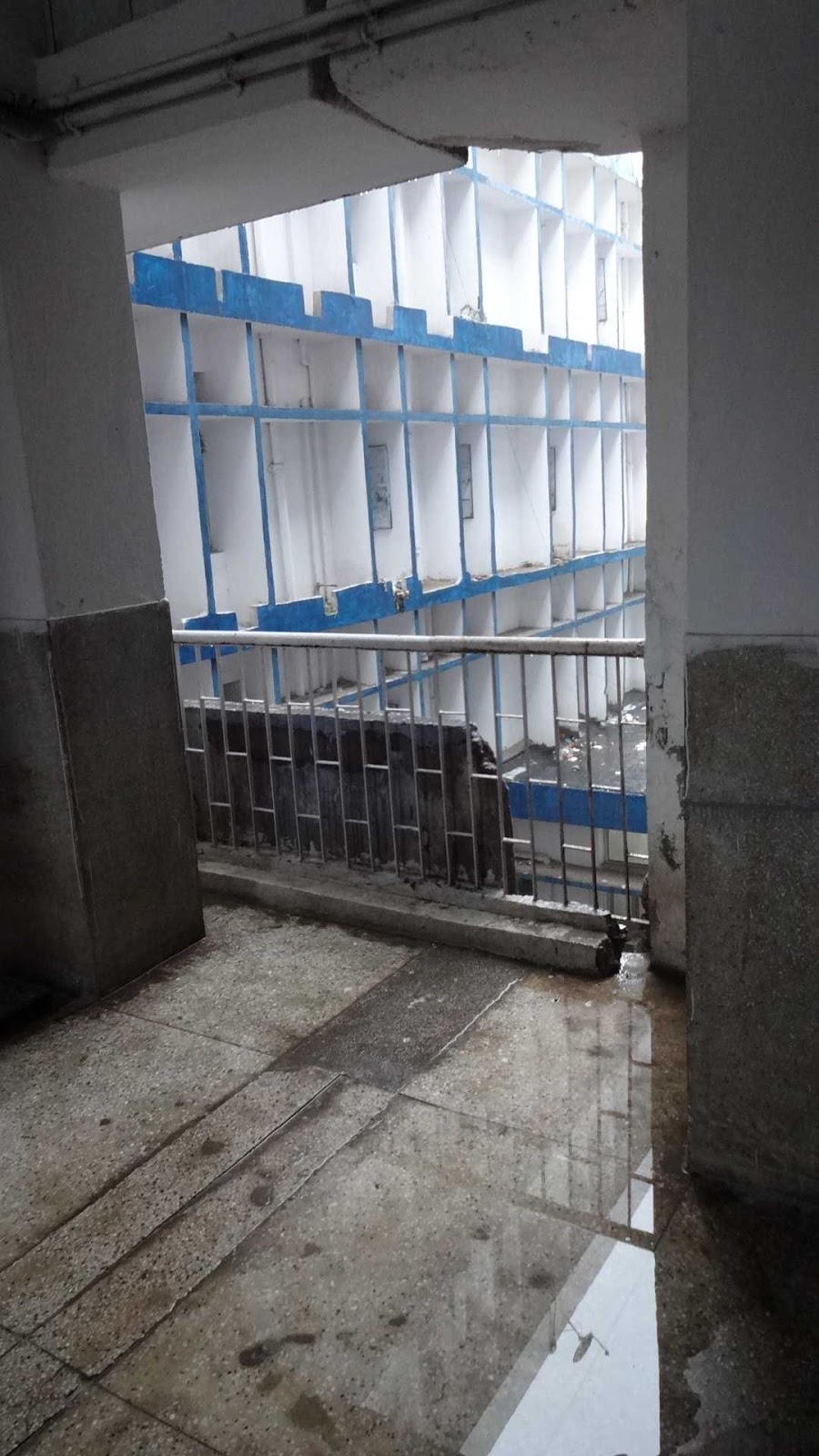
After speaking with Ram and his father-in-law, we waited in the hall for a nurse to arrive, as heavy monsoon rains started outside along with some startling thunder. I noted that water was simply splashing in the sections of the hall open to the outdoors, as well as through open or paneless windows. Most of the lights were off, both in the hall and the wards, though a couple came on when it got particularly dark from the gathering clouds.

Heavy rains surprised us
Water flooded the hallway as we
waited for the nurse to arrive
As we were about to give up on our wait, we met the young Ward nurse coming up the stairs. Ishani asked if she would mind speaking with us and she answered something to the effect of “I have nothing better to do!” She made a very quick check in the KA and TB wards (everyone was comfortable), and led us to a small records room, where we sat to talk.


Talking with the Ward Nurse
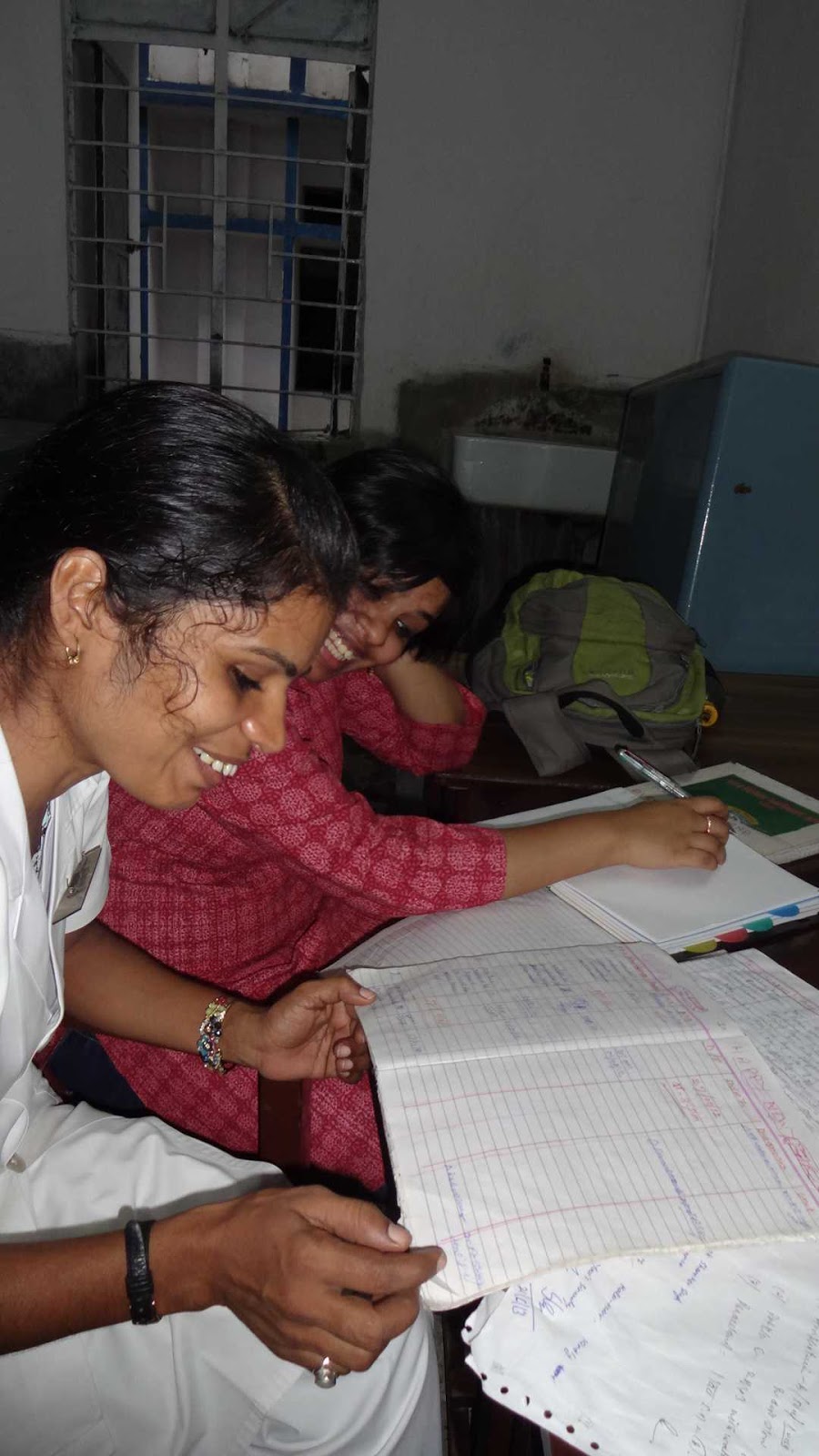
She explained that her role was simply to check up on the patients, assist them in getting some exercise now and then, and take basic physical stats. The current KA patient was the second in the past month, and she showed us a handwritten record book that listed all the Infectious Disease wards’ patients for this year – apparently the only record-keeping system they had.
Looking through the
patient record books
We asked her to walk us through all the patients this year, and found that they had already had eight in 2013. I had expected that there may have been several patients from the same area, but almost all of them were from different Districts within Bihar. We then looked back over the previous two years and found they had just nine cases in 2011, and 12 in 2012. A few district names came up more than once, but there didn't seem to be much of a pattern, other than seasonality – the periods just before (April-May) and just after (September-October) the Monsoon season were the heaviest for KA cases. This was consistent with what I've found in the literature review I've been doing the past few weeks.


As many of the cases seemed to have been sent to the Ward from the ER, we decided to go there next, after thanking the kind nurse for her assistance.


The ER was quite an experience – many, many people crowded in the cavernous, dimly-lit waiting area, most of whom were standing or sitting on the floor. Queues to get forms and to get admitted into different areas of the ER were quite long. 

Outside the emergency room
We wound our way through the halls, asking directions from several people, before finding the right room, where a ER physician, Dr. Kumar, who would refer infectious disease patients to the Ward, was reviewing forms and directing patients on where to go next.

He handed his duties off to another staff member outside the room, and invited us to sit and talk.

When we started asking about Kala Azar, Dr. Kumar mentioned that he had studied under a quite famous authority on KA, one Dr. C.P. Thakur (I had read some of his work on the subject). He said KA was not a very common occurrence here recently.

A peek inside the ER

Here at the PMCH, they tended to diagnose the disease by the guidelines – looking for long-term, unresponsive fever and enlarged spleen, followed by the rapid diagnostic blood test (rK39) and then a splenic puncture to confirm the presence of the Leishmania protozoans. Importantly, they first would rule out the more common malaria and typhoid, as patients with these diseases often present with similar symptoms.

The treatment they usually used was amphotericin B, which the patient, Ram, was receiving. This was in contrast to the rural Health Center we went to the previous day, which used the newer treatment, miltefosine (which was being provided for free by the government there). Apparently the government programs are focused on the rural centers and not the larger district- or state-level hospitals; I will try to confirm this on my next visit to Patna.


Dr. Kumar said that kala azar used to be much more prevalent; in the epidemic of the early 1990’s, they would have as many as 400-500 KA patients in the hospital at a time (I wondered to myself where they would put all these patients, as the KA ward had only six beds – appropriate for today’s lower occurrence rate, of course).

I was very glad to hear of the declining rate of infection, but it seems this also presents some problems – KA is now rare enough that many have not heard of it (like Ram and his family), and many more do not know how to identify a potential patient (like the quack and the other doctors Ram had seen before arriving at PMCH, where trained physicians like Dr. Kumar know what to look for).